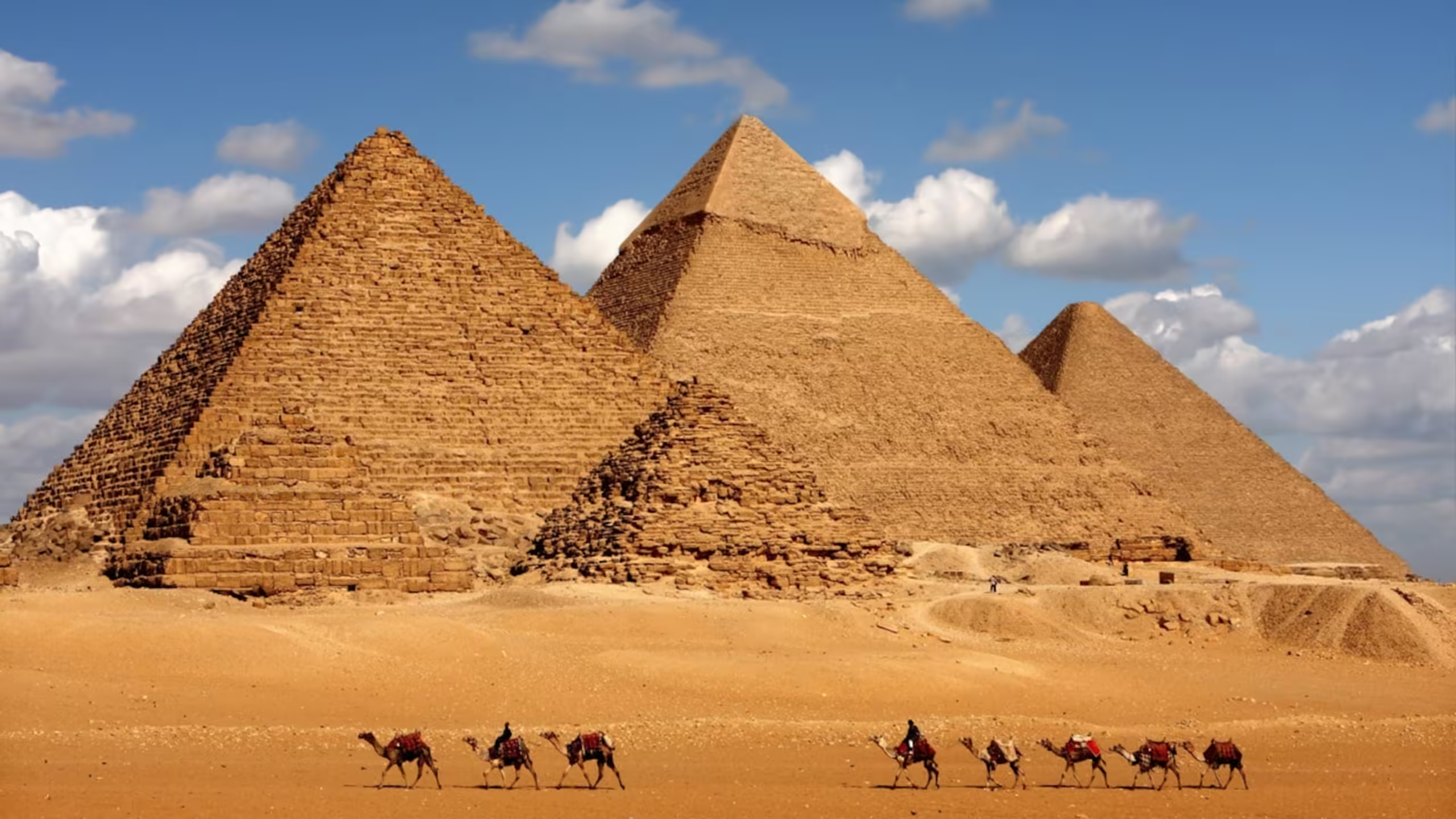
The Birth of Civilizations: Ancient Egypt

The Birth of Civilizations: Ancient Egypt Introduction Ancient Egypt, one of the most fascinating and influential civilizations, thrived in the northeastern corner of Africa for over three millennia. It developed along the fertile banks of the Nile River, leading to remarkable achievements in architecture, art, science, and governance. This article explores the birth and evolution of Ancient Egypt, its geography, society, culture, and enduring legacy. Geography and the Nile River The Lifeblood of Egypt The Nile River was the lifeblood of Ancient Egypt. Flowing from East Africa to the Mediterranean Sea, it provided a reliable water source in an otherwise arid region. The annual floods deposited nutrient-rich silt onto the surrounding lands, creating fertile soil ideal for agriculture. This allowed Egyptians to cultivate crops like wheat and barley, sustaining the population and enabling the growth of cities. Natural Boundaries and Resources Egypt’s geography offered natural protection against invasions. The vast deserts to the east and west, the Mediterranean Sea to the north, and the cataracts of the Nile to the south acted as natural barriers. This relative isolation allowed the civilization to develop without frequent interruptions from external threats. Additionally, Egypt had abundant natural resources, such as gold from Nubia, copper from the Sinai Peninsula, and limestone from local quarries, which were essential for trade and monumental construction. Early Settlements and the Rise of Kingdoms Pre-Dynastic Period The Pre-Dynastic Period (circa 6000-3100 BCE) saw the establishment of small agricultural communities along the Nile. These early settlers developed skills in farming, pottery, and weaving. They began to form larger communities and engage in trade. As these settlements grew, social hierarchies emerged, and regional chiefdoms developed, laying the groundwork for more complex societies. Unification of Upper and Lower Egypt Around 3100 BCE, the unification of Upper and Lower Egypt marked the beginning of the Dynastic Period. According to tradition, King Narmer (also known as Menes) achieved this unification, becoming the first pharaoh of a united Egypt. This event laid the foundation for a centralized state, with the pharaoh as the supreme ruler, ensuring political stability and enabling the development of a complex and enduring civilization. The Old Kingdom: Age of the Pyramids The Third Dynasty The Old Kingdom (circa 2686-2181 BCE) is often referred to as the “Age of the Pyramids.” It began with the Third Dynasty, under which King Djoser commissioned the construction of the Step Pyramid at Saqqara, designed by the architect Imhotep. This pyramid was the first monumental stone structure in history and set a precedent for future constructions. The Fourth Dynasty and the Great Pyramids The Fourth Dynasty saw the construction of the most iconic pyramids, including the Great Pyramid of Giza built for Pharaoh Khufu. These massive structures demonstrated the pharaoh’s divine power and the state’s organizational capabilities. The construction of such grand monuments required a large workforce, advanced engineering skills, and meticulous planning. The pyramids served as tombs for the pharaohs, reflecting their beliefs in the afterlife and the importance of ensuring a safe passage to the next world. The Middle Kingdom: Cultural Flourishing Reunification and Stability The Middle Kingdom (circa 2050-1710 BCE) followed a period of political fragmentation known as the First Intermediate Period. Pharaoh Mentuhotep II reunified Egypt, restoring stability and initiating a period of cultural and economic revival. This era saw the expansion of trade routes, improvements in irrigation systems, and the establishment of a more centralized administration, leading to increased prosperity and cultural development. Literary and Artistic Achievements The Middle Kingdom is renowned for its literary and artistic accomplishments. Literature flourished, with works such as “The Tale of Sinuhe” and “The Eloquent Peasant” reflecting the values and concerns of Egyptian society. These texts offer insights into the daily lives, moral values, and societal norms of the time. Artistic expression also reached new heights, with finely crafted jewelry, sculptures, and elaborate tomb decorations showcasing the skill and creativity of Egyptian artisans. The New Kingdom: Empire and Expansion The Eighteenth Dynasty The New Kingdom (circa 1550-1070 BCE) marked the height of Egypt’s power and influence. The Eighteenth Dynasty, beginning with Pharaoh Ahmose I, expelled the Hyksos invaders and established a period of military conquests and territorial expansion. Notable pharaohs like Hatshepsut, Thutmose III, and Ramses II extended Egypt’s influence as far as modern-day Syria and Sudan, creating an empire that brought wealth and diversity to Egyptian society. Religious and Cultural Developments The New Kingdom also saw significant religious and cultural changes. Pharaoh Akhenaten introduced the worship of the sun god Aten, shifting from traditional polytheism to a form of monotheism. This radical religious reform was later reversed by his successor, Tutankhamun. Temples at Karnak and Luxor were expanded, showcasing the grandeur of Egyptian religious architecture and the devotion of the pharaohs to their gods. These temples served as centers of worship, economic activity, and cultural life. Society and Daily Life Social Structure Ancient Egyptian society was hierarchical, with the pharaoh at the top, followed by nobles, priests, scribes, artisans, and peasants. The pharaoh was considered a living god, responsible for maintaining ma’at (order and justice). Nobles and priests assisted in governance and religious duties, while scribes kept records and artisans produced goods. Peasants formed the backbone of society, working the land and providing labor for state projects. This social structure ensured the smooth functioning of the state and the continuity of Egyptian civilization. Religion and Beliefs Religion was central to Egyptian life, with a pantheon of gods and goddesses governing various aspects of the world. Key deities included Ra (the sun god), Osiris (god of the afterlife), and Isis (goddess of magic and motherhood). Egyptians believed in an afterlife, leading to elaborate burial practices and the construction of tombs filled with goods for the deceased’s journey. This belief system influenced all aspects of daily life, from agriculture to architecture, and ensured the pharaoh’s divine rule. Achievements in Science and Technology Medicine and Mathematics Ancient Egyptians made significant advances in medicine and mathematics. Medical texts like the Edwin Smith Papyrus reveal their knowledge of

The Birth of Civilizations: Ancient Egypt Read More ยป